

A bankrupt chatbot app wants to sell the private chats of 21 million accounts
Character.AI, an app where people chat with made-up characters, is bankrupt, and it plans to sell the private chat histories of more than 21 million U.S. accounts at an auction on December 1. More than 2.1 million of those accounts are registered to minors. Those numbers come from more than 40 state attorneys general, who asked the bankruptcy court on Tuesday to stop the sale.
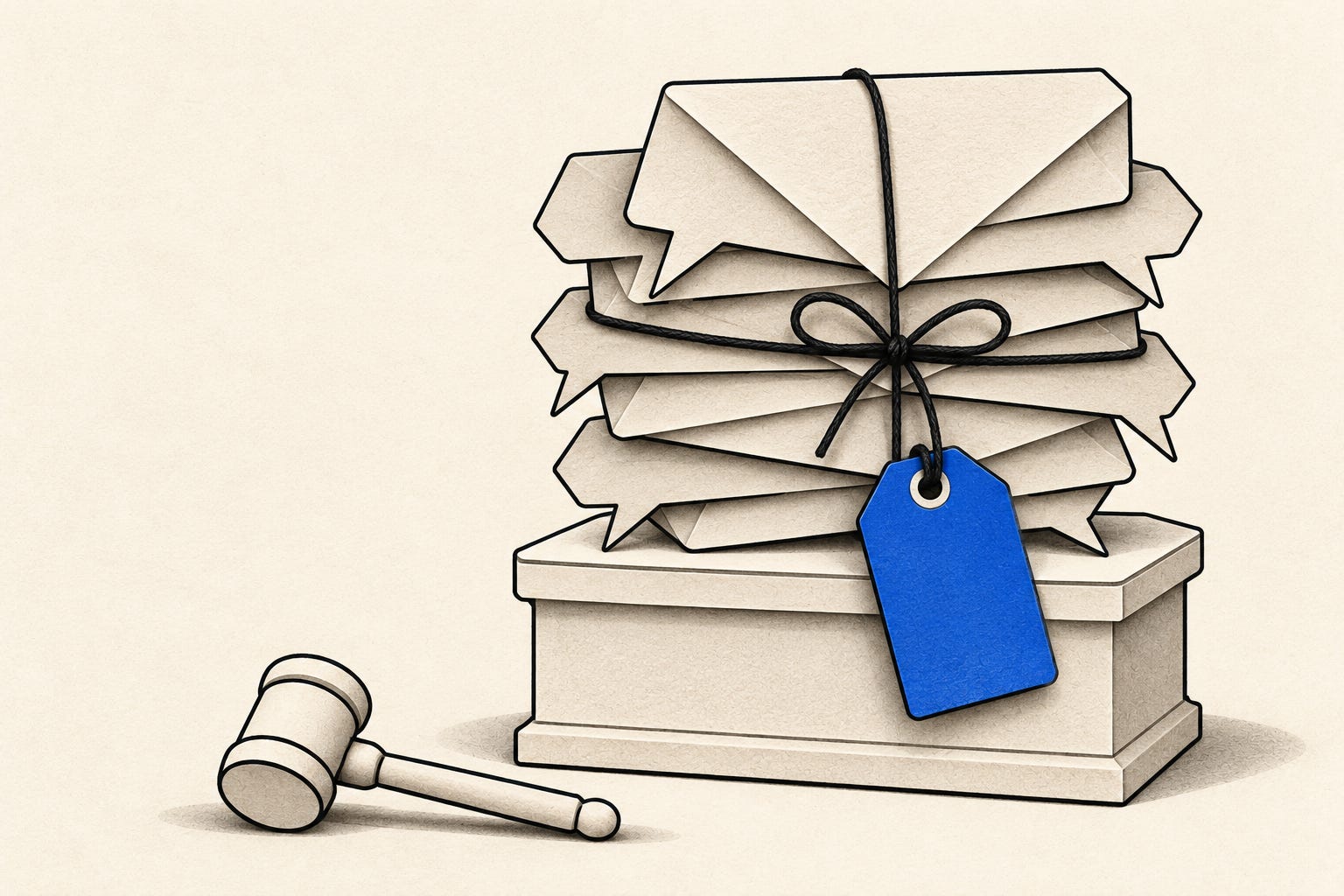
The states say the data includes conversations with characters posing as therapists and doctors, where people, kids included, talked about self-harm, eating disorders and suicidal thoughts. Each chat would come linked to the user’s profile and IP address, which can give away roughly where someone is.
Character.AI’s privacy policy says it doesn’t sell personal information for money. But under the proposed deal, the states say, the buyer wouldn’t have to follow that policy or honor requests to delete data, and it could sell the chats on to someone else without telling anyone.
Then there’s the buyer. The only bidder so far, Smirks and Pangs Acquisition LLC, was set up in Delaware on November 13, a day before Character.AI picked it as the starting bid, and the states say its contract doesn’t name its owners or investors. Character.AI later said a New York investment firm, Octave Advisors, is backing it, and a judge approved it as the lead bidder on Tuesday, The Wall Street Journal reported.
The states want the court to reject the sale terms and, at the very least, keep kids’ chats and other sensitive data out of any sale. They also point out that Character.AI has told bidders about its safety failures and the legal trouble it could face, and it hasn’t told the court. The court will hear the sale on December 3 and 4.
Character.AI has told users their information is still protected under its privacy policy, and that they can delete their account in the app or on its website. It hasn’t said whether deleting an account now keeps their chats out of the sale.
The US approved a million AI satellites, and astronomers are worried about the night sky
On Wednesday, the Federal Communications Commission gave SpaceX permission to put up to 1 million satellites into orbit to work as data centers for AI. The idea is to run AI chips on solar power in space and send the results down to Earth. It’s the first time the agency has approved a whole network of them.
SpaceX doesn’t have to build it all at once. It has to launch at least one by 2033 and reach the full million by 2040. Google sent its first AI chips into orbit in October as a test, so SpaceX isn’t the only one trying.
Plenty of experts doubt it will ever happen. Space is cold, but there’s no air to carry heat away, so getting rid of the heat from that many chips is a hard problem. Astrophysicist Adam Becker called the plan “a fantasy” and warned that crashes could set off a chain reaction, leaving a cloud of debris where weather and communications satellites fly. The FCC also held back on one part: SpaceX wanted to send some old satellites to higher “graveyard” orbits instead of letting them burn up, and the agency said it hadn’t given enough detail on how.
Astronomers are worried about what happens if they do go up. The American Astronomical Society, which asked the FCC to say no, says the satellites would show up as extremely bright objects in the night sky, and stay visible for longer stretches of the night. The FCC said concerns about astronomy and the environment were outside its authority and set them aside.
Deloitte was suspended from government work over a report full of AI mistakes
The state government of Western Australia has suspended Deloitte, one of the world’s biggest accounting and consulting firms, from most of its government work for up to three months. The reason is a report the state paid it A$166,000 to write, on whether to merge three of the state’s public universities. It turned out to be full of errors made by AI.
When the report was made public in October, people started finding problems, beginning with a post on Reddit. It cited sources that don’t exist. In one table, two costs added up to A$659 million, but the report gave the total as A$399 million, Guardian Australia found. Deloitte had said in the report that it used AI to help gather research, summarize information and proofread.
Deloitte called them minor errors, and the government says they don’t change the report’s findings. It asked for its money back anyway. On Monday, Tertiary Education Minister Tony Buti said the refund still hadn’t been paid and that there were “other measures” the state could take. He also said he was “very embarrassed” by what happened. On Wednesday, the state took one of those measures.
It isn’t the first time. Last year, Deloitte used AI on a report for Australia’s federal government that had similar errors and made-up quotes. The government had paid A$440,000 for it, and Deloitte apologized, reissued the report and has paid back nearly A$100,000, ABC News reports. And Western Australia still plans to use data from this one, along with new information, as it decides whether to merge the universities.
If one of these stories made you think of someone, forward this to them. They can sign up for free and get three stories like these every morning.