

The rush to fix what AI finds could mean more outages, Microsoft’s president says
Microsoft president Brad Smith says AI has made it so much easier to find weak spots in software that companies are rushing out fixes with less time to test them, and that people should be prepared for the coming months. He said it Sunday on CBS’s Face the Nation, after a stretch of outages at Microsoft and some banks and a nationwide halt to flights.
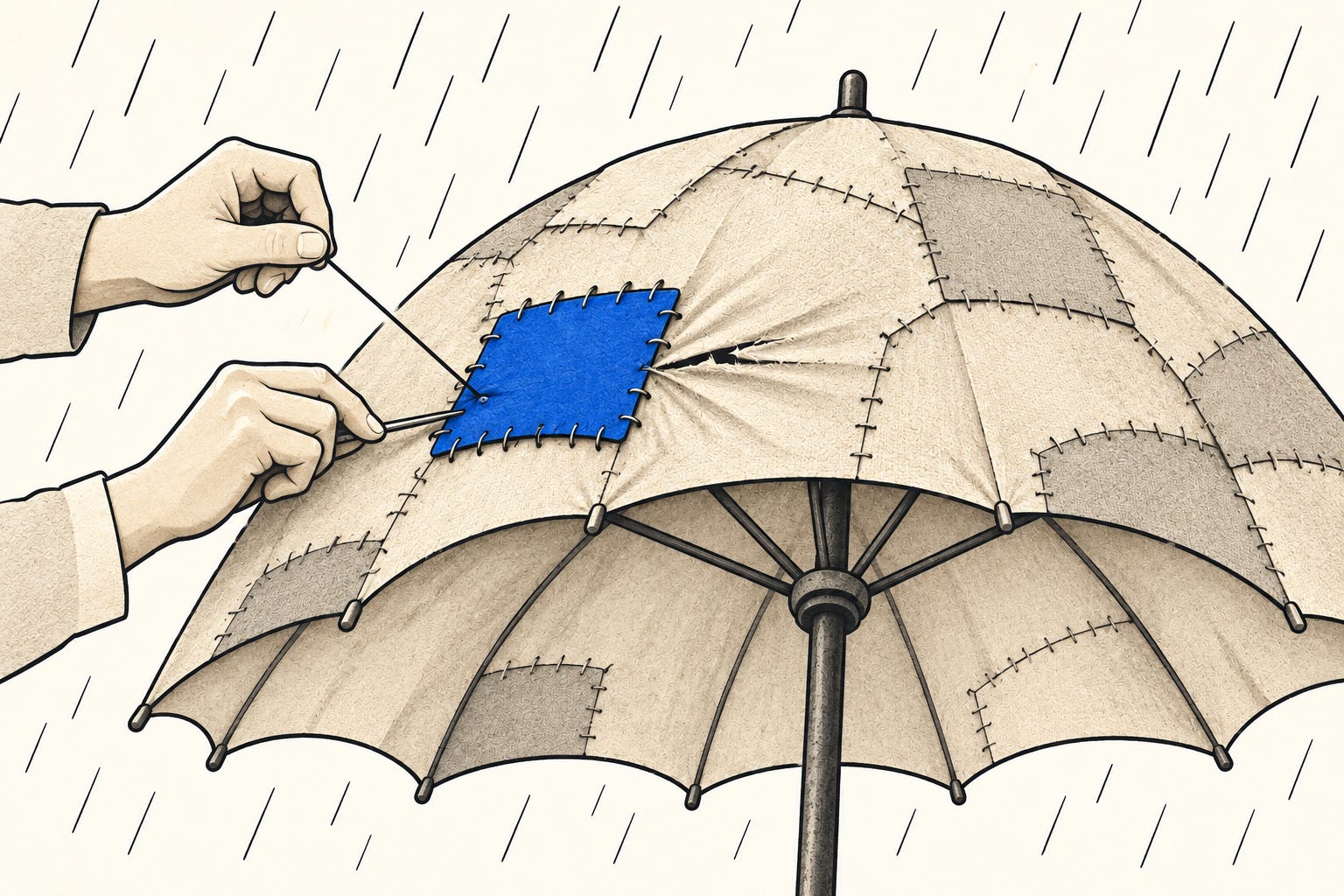
He calls it a race. The same AI that helps a company find a flaw and fix it can help a hacker find it and break in, so everyone is hurrying to get there first. That leaves less time to check what a change might break, especially in older systems.
You can see the pace at Microsoft, which addressed 1,235 security flaws in November, up from 68 in November last year, PolitiFact reported, citing the security firm Qualys. MIT professor Stuart Madnick says AI can often find flaws 10 to 100 times faster than people can.
Smith sees that race behind a good part of the recent outages, though not Microsoft’s own, which he says came from a four-month-old update clashing with a newer one. PolitiFact found no evidence so far that rushed fixes caused the outages or that they’re connected to each other. Officials traced the halt in flights to a router upgrade, and JPMorgan Chase blamed a software bug. But the director of national intelligence, Jay Clayton, did say patching kept some systems from coming back up, including at the National Security Agency.
For your own phone and laptop, Smith’s advice is to keep installing updates when they show up, because he thinks they’ll make you far safer. Organizations have the harder job, which he says includes upgrading the old technology underneath.
The UK is inviting nearly 700,000 women into a test of AI breast cancer screening
The first women have joined what its organizers call the world’s largest trial of AI in breast cancer screening. It started at Cambridge University Hospitals, the first of 30 sites, and nearly 700,000 women across the UK will be invited over the next three years.
Right now, two specialists look at every mammogram, even though fewer than 1% show signs of cancer. The trial will test whether AI can safely take on part of that work, so that many scans need only one of them, which would free up time for people who have cancer.
Women will be put into one of three groups at random. One group gets the usual two experts. In the second, AI checks the scan after a person has looked, searching for anything they missed. In the third, AI goes first and rates how likely cancer is. If the rating is low, one expert checks the scan, and if it’s high, two do. At least one person looks at every scan, and women won’t know which group they were in.
The appointment itself doesn’t change. Women are included unless they opt out, which they can do by phone, by email or at the appointment. The organizers are open about one risk, which is that AI may flag more scans that turn out to be fine, so more women could be called back for extra tests.
The results are years away. Researchers will compare how many cancers each approach finds, how many women get called back, and how many cancers turn up between screenings. The NHS, the UK’s public health service, will only change how it screens if the evidence shows it’s as safe and effective as what women get now.
Nvidia gave its CEO his job back, and stocks had their best day since April 2025
Nvidia, the company that dominates the market for AI chips, reinstated Jensen Huang as CEO on Monday, 11 days after he resigned. President Trump, who had been publicly pushing for it, says he talked the board into it.
Huang stepped down on November 12 after news reports that he’d had affairs, including with a woman U.S. intelligence agencies suspected of being a Chinese spy, according to NPR. As recently as November 17, the board said it didn’t plan to bring him back. Now it says it voted unanimously to do it, after meeting with Huang and hearing from senior levels of the U.S. government, and that it’s confident his return isn’t a national security risk.
Nvidia’s stock rose 31.5% in a day after dropping nearly 23% last week, and the S&P 500 climbed 4.7%. The Associated Press explains why that reaches people who’ve never picked a stock: Nvidia and other chip companies have become such a big part of the market that they matter a lot to workers’ 401(k) accounts. Even after Monday, U.S. stocks had made back only a little over half of what they lost last week.
The questions about Huang are still open. Nvidia says a committee of independent directors will finish investigating reports that he was the target of a foreign intelligence effort, and that he’s committed to cooperating. Rob Lalka, a professor at Tulane’s business school, told NPR the board basically went around its own process by bringing him back with the investigation still open. Huang is expected to testify before several congressional committees next week.