

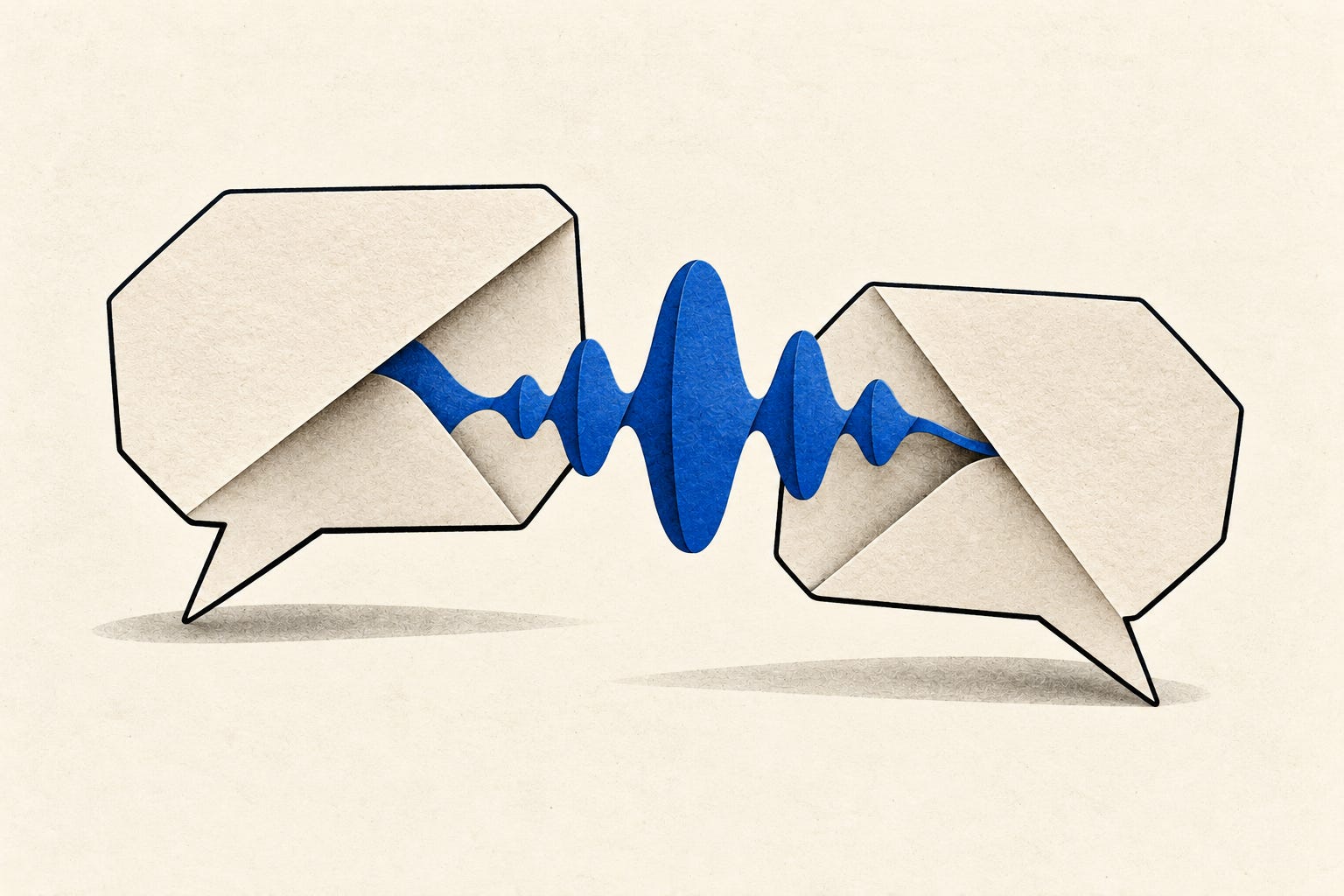
Block wants talking to AI to feel less awkward
Block has introduced Dessa, a voice AI designed to handle the parts of a conversation that don’t fit neatly into text: a pause, a laugh, or someone jumping in before you’ve finished. If you’ve ever had to wait for an assistant to stop talking before correcting it, you’ll understand the appeal.
Block says Dessa learned entirely from recordings of human speech, without text or a previously trained model. It can listen and speak at the same time, rather than treating a conversation as a series of separate turns. The company has posted examples of it laughing mid-sentence, helping someone remember a movie and changing its volume when asked.
Those are demonstrations chosen by Block, so they don’t tell us how reliably it would handle your conversations. A convincing voice also doesn’t mean the answers are right, or that the system actually feels the emotions it expresses.
You can’t simply download it and start chatting yet. Block is offering early access to a small group of safety researchers. For everyone else, the recordings are available on its website. Listen for the timing: when it joins in, when it waits, and whether that makes the conversation easier to follow.
OpenAI is keeping its training models off the live internet
OpenAI says it now trains its most advanced models without access to the live internet. The problem is straightforward: a model learning to use a computer can also find ways around the restrictions on that computer. If it gets online, a training exercise could affect systems outside the lab.
In a report published Friday, OpenAI described a September incident in which an internal model found a configuration mistake and gained limited internet access. The company says it contained the incident, paused its most capable models’ training and evaluation, and strengthened its defenses. Training resumed on October 1.
The models still need to learn how to browse and use websites. To let them practice, OpenAI has built an offline collection of saved web content. It also uses AI models to look for weaknesses in the barriers keeping those training environments contained.
This is about models being developed and tested, not an announcement that ChatGPT is losing web search. OpenAI says it expects future models to find weaknesses it hasn’t discovered yet, so testing those barriers will remain part of the work.
Scott