

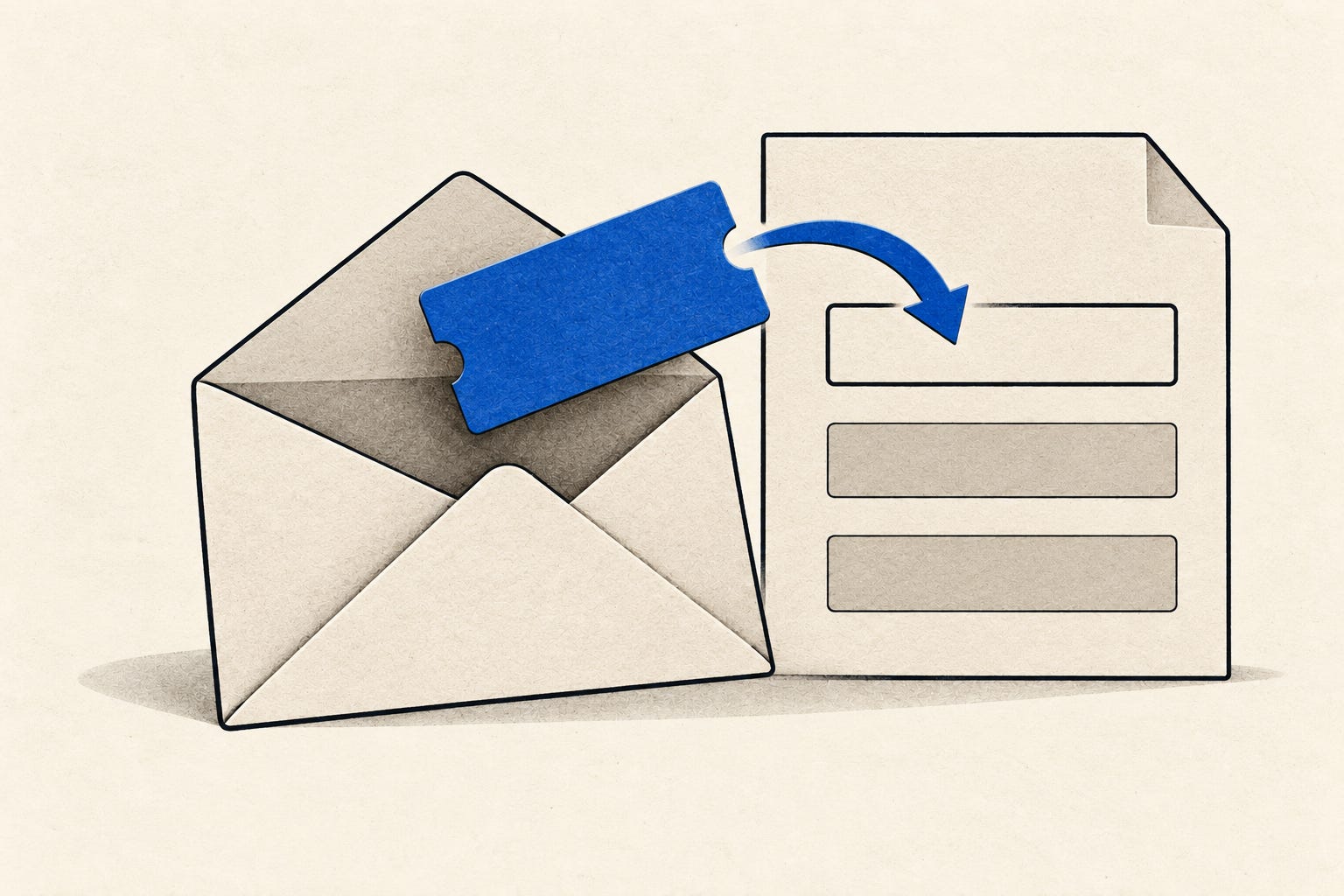
Chrome can pull your order number out of Gmail
You’re filling out a form, it asks for an order number, and now you have to go digging through your email. Google added a feature to Chrome on Wednesday that can find those details in Gmail and suggest them right in the form.
It goes beyond the name, address and card details that autofill already remembers. Google says it can bring up order numbers, package tracking information and flight bookings. The idea is to save you the trip back to your inbox, where you’d otherwise have to find the message and copy the right number.
The rollout is starting in the U.S. on desktop, Android and iPhone. You need Gemini in Chrome with Personal Intelligence enabled, so this won’t appear for everyone who uses the browser. Chrome’s settings let you control whether enhanced autofill is on and what it can access.
If you get access, check the suggested detail before submitting the form. Having a number filled in is helpful; sending the wrong one still creates work for you.
Anthropic is giving more research labs free access to Claude
Scientists can collect far more data than they can easily work through. Anthropic announced Wednesday that it’s expanding its free Claude credits program through partnerships with 20 scientific foundations, institutions and research groups, giving more researchers a way to try AI on that work.
One of the projects is AstroPath at Johns Hopkins, which borrows techniques from astronomy to study tumors cell by cell. Another is gnomAD, an open database of genetic variation that researchers use to investigate rare diseases. Anthropic is providing credits to these initiatives, not claiming Claude created the underlying research.
The program started with individual scientists in May 2025. Some partners will distribute the credits to researchers, rather than use them only inside their own labs. Anthropic says scientists are using Claude to help analyze data, plan experiments and develop hypotheses.
Many of these partnerships are still early. The announcement gives researchers more access to the tools; it doesn’t yet show whether that access will lead to better treatments or faster discoveries.
Nvidia’s new AI can answer questions about a meeting recording
A meeting transcript saves you from replaying the whole call, but you can still spend ages searching it for what everyone agreed to do. Nvidia released a new speech model Wednesday that can transcribe a recording, label the speakers and answer questions about what was said.
Called Nemotron 3.5 Transcribe, it lets you ask for different results from the same audio. You could request a transcript or ask which decisions came out of the meeting. Nvidia says it handles recordings up to an hour long and can label up to eight speakers. It transcribes 40 languages, although translation and speaker labeling support fewer languages, and its question-answering training is in English.
This is a model developers can build into apps, rather than a finished meeting assistant. Nvidia has also linked a browser demo if you want to try it without setting up a server. Smaller versions intended to make local use easier are still coming, so don’t read this as a one-click download for any laptop.
As with other transcription tools, check names, speaker labels and important answers against the recording before relying on them.
Scott