

Anthropic says its newest model, Claude Fable 5.2, designed three electronic gadgets that engineers then built, and all three worked without any changes to their circuits. The devices, shown when the model was released on November 9, are a home voice-assistant hub, a USB speakerphone and a handheld virtual pet.
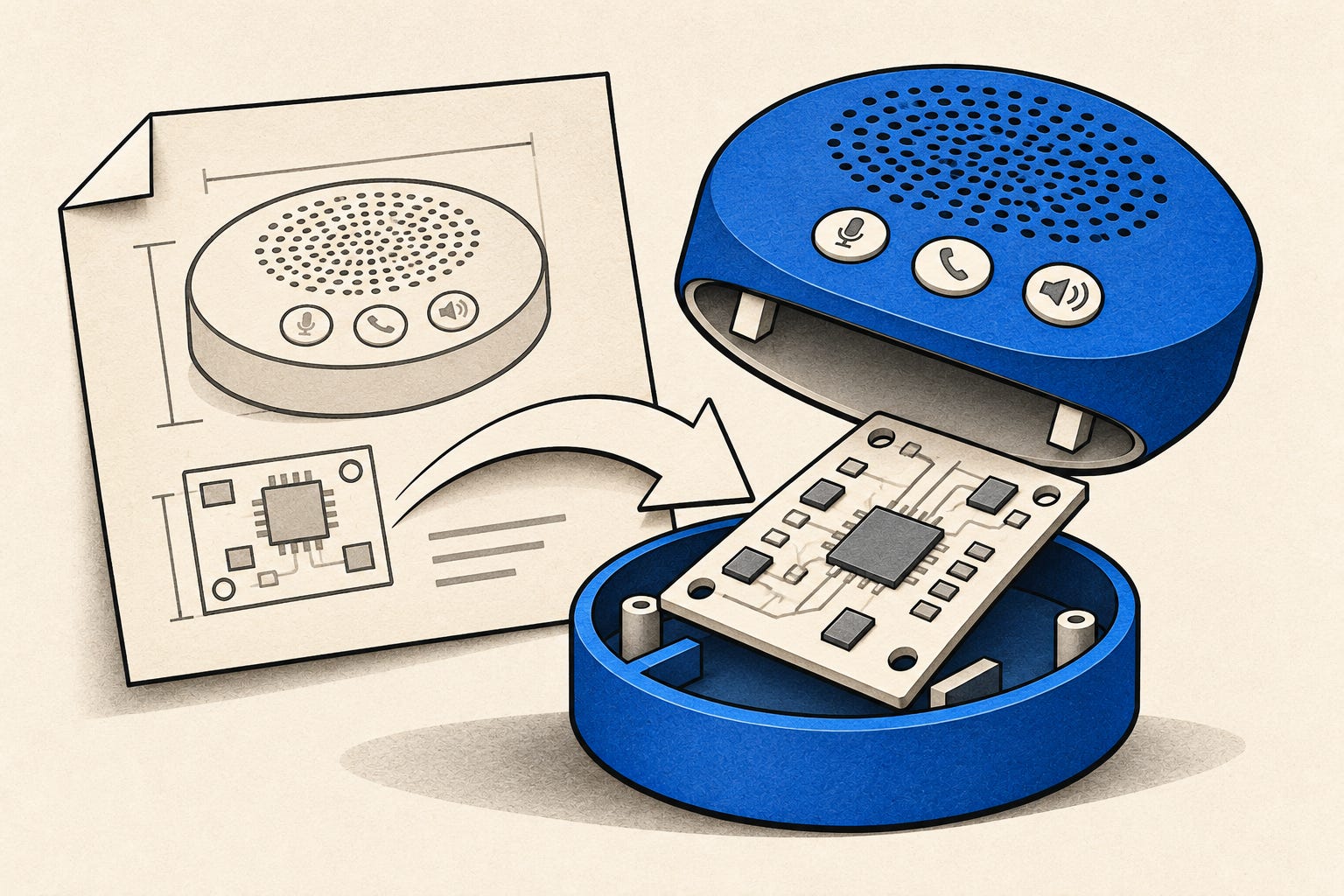
For each one, Anthropic gave Claude a simple prompt describing the device and its main hardware needs, and human input after that was limited to short directives. Claude wrote the specifications and chose parts that US distributors had in stock. It then laid out four-layer circuit boards, designed the cases and wrote the software, and each board was ready for manufacturing in under a day. Diode, a company that designs and manufactures circuit boards, built the boards, and Claude guided its engineers through testing and assembly.
Earlier Claude models struggled to lay out a board or make parts fit together, according to the research write-up, and Diode ended up with many boards from them that were 95 percent complete and still unusable. The speakerphone had exactly that kind of fit problem. Its board couldn’t be lowered straight into the case because the mute switch would hit the back wall, and Claude worked out that it would fit if tilted about 25 degrees on the way in. It tested the tilt in a 3D model and added the step to the assembly instructions.
The devices are prototypes, and Anthropic has a commercial relationship with Diode. They haven’t had electrical validation, antenna tuning, heat testing or certification, and they weren’t designed for mass production. Claude also wasn’t connected to any test equipment, so Diode’s engineers had to physically build and test everything.
Next, the company plans to investigate whether Claude can design denser, faster and more complex boards, check them in simulation, and learn from measurements taken on the finished devices.