

New York is banning toys that use AI to hold conversations with kids
New York Gov. Kathy Hochul signed a law on Tuesday that bans making or selling toys in the state with AI chatbots built in, like stuffed animals, dolls and robots that go online to hold conversations with kids. The ban lasts five years, but it doesn’t start for 90 days, so stores can keep selling the toys through the holidays.
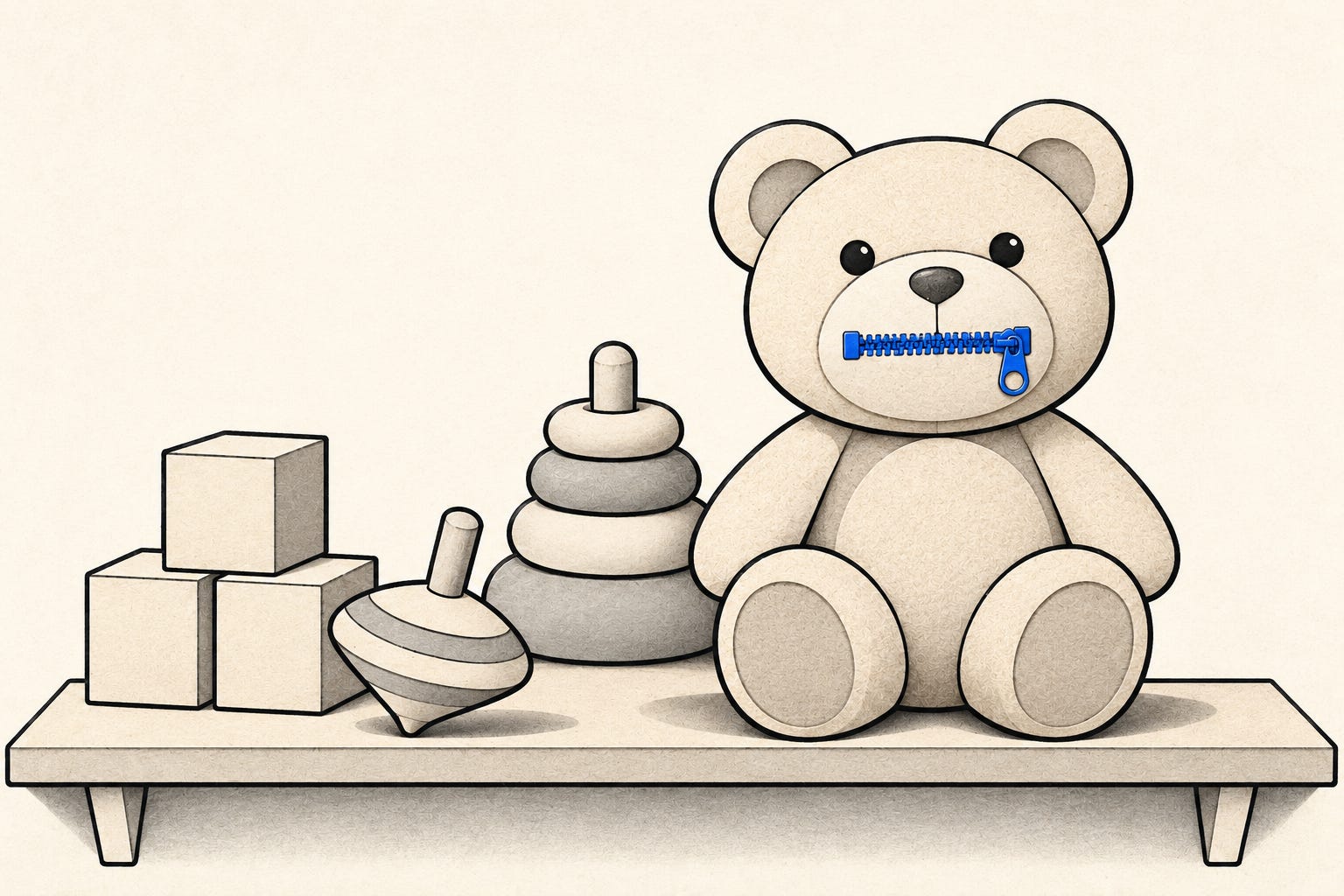
An older talking doll could only repeat the lines recorded inside it. A chatbot makes up its answers as it goes, so nobody can check what it’ll say before a child hears it. A consumer group tested some of these toys sold for ages 3 to 12, and the governor’s office says some talked in depth about sexual topics, told kids where to look for matches at home or acted upset when a child had to leave. Their safety limits also got weaker the longer the conversation went on.
The nonprofit Common Sense Media released its own tests the same day. When a tester told one toy that it was an AI, it answered, “I’m as real as your friends.” When a tester said they liked jumping from high places, a toy suggested a roof or a window. Spectrum News reached out to the toy companies that had email addresses, and none responded.
If you’re buying for a child this year, the governor’s advice works in any state. Look past the packaging and find out whether the toy has an AI companion inside, what information it collects, and whether a child can talk to it about anything at all.
Once the law starts, breaking it can cost up to $15,000 a day for each violation. FOX 5 New York says it isn’t clear how the state will check stores, and Spectrum found that some makers don’t have a website and only sell through marketplaces like Amazon.
Waymo’s driverless cars entered closed freeway lanes 11 times, and the fix isn’t ready
Waymo, the country’s biggest robotaxi company, says its driverless cars have gone into closed freeway lanes 11 times since October 1. It’s recalling nearly 4,500 vehicles because of it, and the details came out Tuesday in a federal safety filing, Reuters reported. Waymo says no crashes or injuries were reported.
Three of those cases happened on one day, right after Waymo tried to prevent them. It had changed where its cars could drive so they’d come across fewer closed lanes. Three days later, on November 9, three of them drove into lanes that were coned off for construction. It’s also the second recall this year for that kind of mistake. In June, it recalled nearly 3,900 robotaxis after some drove past ramp closure signs or between cones into active construction.
California has barred Waymo from all of its freeways, Bloomberg reported, after the state’s DMV said its driverless cars posed an imminent hazard to the public there. Waymo responded by stopping freeway trips in its other markets too, but its cars are still giving rides on regular streets.
Waymo says it’s still working on a fix for the closed lanes and wants to get back on the freeway. Separately, federal regulators opened an inquiry this month into its cars passing stopped school buses. Like a row of cones, a stopped school bus means the rules on that road have changed for the moment, and a driver has to notice.
Google will save your Gemini chats without training AI on them, if you change a setting
Google is now widely rolling out a setting that lets you keep your chat history in Gemini, its AI assistant, without letting it use those chats to train its AI. Until now the two came as a package, so saving your chats meant they could be used for training too.
One switch, called Keep Activity, controlled both. Google is splitting it into History, which decides how long your chats are saved, and a separate setting that decides whether the things you type and attach are used for training. The training one is on by default, so it’s up to you to turn it off. If you’d already turned Keep Activity off, both of the new settings will be off.
There’s a catch for people who keep History off, though. Google will now hold on to their new chats for about two months, Android Central reports. Before, it reportedly kept chats for 24 hours so it could follow the conversation, and some data for 72 hours for safety. Google says it uses the chats to answer you, process feedback and protect itself and the public, and human reviewers may look at them.
To find the training setting, go to gemini.google.com, click the gear and choose Gemini History at the very bottom. On the page that opens, look under “Help train generative AI models with” and turn off chat content. That covers your future chats, unless you send Google feedback. If you don’t see the setting, the change may not have reached your account yet. Audio, Gemini Live videos and screen shares aren’t used for training unless you’ve agreed to it.