

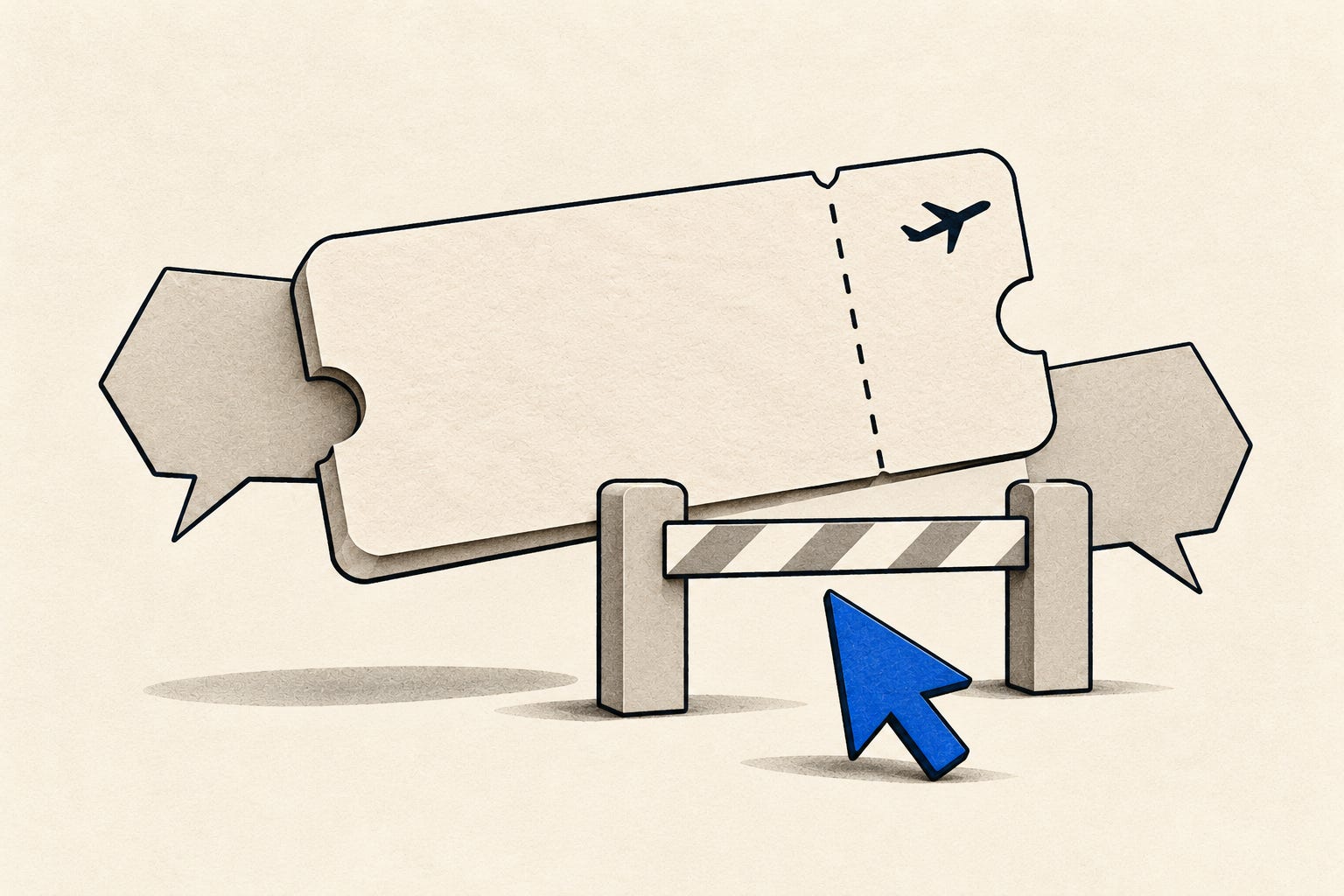
United is limiting AI agents that book on your behalf
On Wednesday, United Airlines said it is taking steps to restrict unauthorized third-party personal AI agents. These are assistants you might give your login so they can book or manage trips for you. The restrictions apply on United’s own app and website. They also reach agents working through travel agencies and aggregators, through updates to United’s booking, ticketing and distribution policies.
United says an agent holding your login can expose your data, make purchases you didn’t intend, change your account or spend your MileagePlus miles. The airline also points to check-in, where a person has to acknowledge what can’t go in their bags, and describes that as a regulatory concern.
So an assistant that can click through a booking page isn’t necessarily allowed to act there for you. For United bookings, changes and miles, do it yourself in the official app or on United’s own website.
Google’s Tabletop puts a group’s scattered plans in one shared space
Group plans usually end up scattered across a chat thread, a pile of links and a few files. Tabletop, a new Google Labs experiment announced Wednesday, is meant to gather all of that in one place.
You add links, files and ideas, then either prompt @tabletop or pick a template. It then builds small interactive tools such as an itinerary, a dinner poll, an expense splitter or a tournament bracket. You share an invite link in the group chat, and everyone can use the same space at the same time, much like a Google Doc.
Because everyone works in the same poll or itinerary, nobody has to ask a chatbot alone and then paste its answer back into the chat.
For now, Tabletop is a waitlist experiment open to people 18 and older in the US.
Jensen Huang resigns as Nvidia’s CEO
Nvidia announced on Thursday that Jensen Huang has resigned as president, CEO and board member, effective immediately. Colette Kress, the chief financial officer, is now interim CEO and will remain CFO. Meanwhile, the board is searching inside and outside the company for a permanent successor. Harvey Jones becomes the board’s first chair.
Nvidia builds much of the computing hardware that AI systems are trained and run on, so a sudden change at the top matters to the many companies building on its chips. The board says it expects operations, customer commitments and the product roadmap to continue uninterrupted.
The release gives no reason for Huang’s departure. The next scheduled look at the company is its earnings report on Tuesday, November 17, which was set before this announcement.